Recent Post

RTP Explained With Easy Examples ...
In the modern era of digital entertainment, millions of enthusiasts worldwide engage with online games that rely on complex mathematical algorithms. Among the various metrics used to evaluate these games, Return to Player, commonly referred to as RTP, stands out as one of the most vital figures. Understanding this configuration helps participants set realistic expectations and make highly informed choices before allocating their recreational budgets.
The Core Meaning of Return to Player
At its absolute foundation, RTP represents the theoretical percentage of all wagered money that a specific game will distribute back to its community over a prolonged period. For example, if a digital game features a ninety-seven percent payout rate, it means that ninety-seven dollars out of every one hundred dollars wagered is expected to return to the collective player pool. The remaining three percent constitutes the operator's mathematical advantage, which ensures the platform remains sustainable.
It is absolutely essential to recognize that this statistical baseline is not calculated over a few dozen rounds or an individual session. Instead, certified testing organizations determine these values by simulating millions of continuous gameplay sequences under strict regulatory supervision. Consequently, short-term outcomes will vary wildly from this number due to inherent random dynamics.
Clear and Practical Examples of Gameplay Statistics
To grasp how this mechanism functions during real sessions, imagine a scenario where one thousand participants each wager one hundred dollars on the same digital title over several months. In total, the community contributes one hundred thousand dollars into the system during this timeframe. If the game is mathematically configured with a ninety-six percent metric, the system is designed to return ninety-six thousand dollars in total prizes back to that group.
However, this cumulative distribution does not guarantee that every individual participant will experience an identical ninety-six percent return rate. One lucky participant might secure a massive prize worth thousands of dollars from a minor wager, while another might experience consecutive losses during a brief afternoon session. Reliable platforms like m88 link 2 ensure that these transparent figures remain clearly visible so users can identify titles built on certified algorithms. By checking these indicators beforehand, you can cultivate a much healthier perspective regarding standard session fluctuations.
How Volatility Interacts With Theoretical Payouts
Another crucial element that directly influences your session results is volatility, which determines the frequency and distribution size of the payouts. Two entirely separate digital games can share an identical ninety-five percent payout metric but deliver completely different entertainment experiences. A low volatility title usually provides frequent small wins that help keep your session balance relatively stable over time.
On the flip side, a high volatility alternative might feature prolonged dry spells where no winning combinations appear at all. However, when a payout is finally triggered in a high volatility game, it has the statistical potential to be significantly larger. Choosing between these options depends entirely on your personal risk tolerance and how you prefer to manage your entertainment budget.
Smart Tips for Evaluating Game Performance
Prioritizing transparency allows you to browse digital gaming platforms with a high degree of confidence and critical awareness. Always look for published data sheets that have been verified by independent international testing laboratories. This simple habit protects you from unregulated software models and ensures that you spend your entertainment time on fair, mathematically sound platforms.
Ultimately, keeping an eye on certified metrics remains an indispensable tool for anyone interested in smart and responsible digital entertainment. While high percentages can never guarantee immediate short-term victory, selecting them maximizes your long-term value and respects your dedication to safe play. By combining this knowledge with proper session limits, you can elevate your overall experience across any modern digital environment.
Strategic Thinking for Baccarat Tournament Competitors ...
Baccarat tournaments shift the traditional casino dynamic from playing against the house to competing directly against other players. This environment requires deep analytical skills and adaptive planning to navigate shifting leaderboards and chip counts. Competitors who master the underlying tactical shifts gain a distinct advantage over casual participants.
The Core Elements of Tournament Dynamics
In standard baccarat games, your results do not depend on the performance of other individuals at the table. Tournament structures fundamentally change this by introducing a fixed count of hands and limited starting chips. Success is measured entirely by outperforming your immediate table rivals before the round ends.
Understanding your current position relative to the field dictates how much you should risk on upcoming outcomes. Competitors must continuously calculate chip gaps to determine if they need aggressive bets or conservative preservation. Ignoring these external table metrics often results in early elimination from the event.
Positional Advantages and Betting Order
The order in which players place their tournament wagers rotates with each successive hand dealt. Acting last in a betting sequence offers an enormous strategic benefit due to the complete information available. You can observe the exact chip amounts risked by your opponents before finalizing your own play.
When operating from a late betting position, players can match or counter their rivals based on the current standings. Utilizing trusted online resources like the m88 link 2 platform helps players study structured competitive layouts in real time. Capitalizing on these observational advantages separates disciplined champions from average field contenders.
Chip Accumulation Versus Stack Preservation
The early phases of any baccarat tournament demand a cautious balance between risk and safety. Pushing for massive stack growth right away frequently leads to critical losses that cannot be recovered. Wise players focus on staying within striking distance of the leaders during initial deals.
As the elimination threshold approaches, the necessity for calculated aggression increases substantially. If you fall behind the target threshold, you must seize opportunities to bet against the crowd. Shifting between defensive holds and offensive surges is essential to surviving competitive tournament phases.
Contrarian Betting as a Tactical Tool
When trying to overtake a dominant leader at your table, following their exact betting choices is mathematically ineffective. If the leader wagers heavily on the Banker side, placing your chips on the Player side creates a direct variance path. This contrarian choice ensures that a loss for them results in a direct win for your stack.
Executing this maneuver requires precise timing and a clear understanding of the remaining hand count. It should generally be reserved for scenarios where standard progression betting cannot close the existing gap. Mastering these targeted contrarian adjustments elevates a player's long-term competitive success rate.

Random Rewards and Player Satisfaction Metrics ...
Modern game design frequently relies on unpredictable prize distributions to maintain player engagement over extended periods. Understanding how these chance-based mechanics influence player satisfaction metrics is essential for developing sustainable gaming communities. By analyzing user feedback alongside behavioral data, developers can fine-tune their reward systems to optimize enjoyment without causing burnout.
The Psychological Impact of Uncertainty
Unpredictable outcomes trigger distinct neurological responses that heavily influence consumer enjoyment levels. When a reward is uncertain, the anticipation generates higher engagement compared to completely predictable fulfillment systems. This excitement directly shapes long-term player satisfaction metrics and encourages daily interactions with the digital environment.
However, developers must establish a clear balance to prevent player exhaustion or feelings of unfairness. If the probability of obtaining a desirable item is excessively low, user satisfaction drops precipitously. Maintaining a transparent structure ensures that participants feel respected and motivated to continue their journey.
Quantifying User Experience and Joy
Tracking how audiences respond to random item drops requires sophisticated data collection methodologies. Game studios routinely evaluate retention rates, session lengths, and direct player sentiment surveys to gauge overall satisfaction. These analytical approaches help separate short-term excitement from lasting fulfillment within the community.
When these metrics show a decline, it often indicates that the reward frequency requires immediate calibration. Enthusiasts looking for alternative entertainment platforms can explore a trusted m88 link 2 to observe how modern digital interfaces manage user interactions. Ultimately, data-driven adjustments help studios protect user trust while delivering compelling milestones.
Designing Sustainable Progression Systems
A well-crafted progression loop integrates both fixed achievements and surprise incentives seamlessly. Players generally appreciate knowing that their skill investments yield guaranteed progress, while surprise drops add flavor to the experience. This dual approach accommodates various playstyles, keeping both casual and hardcore audiences satisfied over time.
Ethical implementation remains the definitive factor in preserving positive community relationships. Transparent disclosure of drop percentages fosters a healthy ecosystem built on mutual trust rather than exploitation. As the gaming landscape evolves, prioritizing balanced satisfaction metrics will distinguish successful titles from temporary trends.

RNG Technology in Cloud Gaming ...
The rapid expansion of streaming infrastructure has completely transformed how modern players access interactive media. By shifting intense graphical rendering from local hardware to remote data centers, cloud platforms allow high-fidelity experiences to run smoothly on ordinary consumer devices. Behind the scenes, the maintenance of unpredictability and fairness relies heavily on advanced Random Number Generator technology tailored for distributed environments.
The Core Role of Randomness in Remote Simulation
In a cloud-hosted ecosystem, the game engine calculates logic thousands of miles away from the player's physical screen. Every random event, from item distribution to weather changes, must be computed synchronously to prevent visual disconnects. Sophisticated algorithms ensure that these unexpected variables are processed with complete computational independence across all active servers.
Unlike traditional local software, remote architectures must handle thousands of simultaneous requests without creating noticeable delays. High-performance software engines leverage server-side data seeds to create truly unpredictable results instantly. This structural framework allows interactive worlds to remain dynamically engaging while keeping latency at an absolute minimum.
Balancing Network Latency and Algorithmic Execution
One of the biggest obstacles in modern streaming environments is overcoming network jitter and packet loss during real-time data transmission. When a random calculation occurs on a remote host, the result must travel quickly back to the user's monitor without disrupting the fluid simulation. Advanced predictive modeling helps bridge the small gap between remote computation and local frame presentation.
To maintain seamless operation, developers often implement optimized mathematical models that minimize computational complexity without sacrificing security. For enthusiasts looking to explore verified environments, using a reliable m88 link 2 ensures access to modern cloud-optimized frameworks that prioritize low-latency delivery. Striking the perfect balance between swift execution and absolute unpredictability remains a primary goal for systems engineers.
Ensuring Cross-Platform Integrity and Fair Play
Because the interactive simulation is entirely controlled within centralized data centers, players are inherently protected from client-side manipulation. However, operators must still prove that the server-side algorithms distribute outcomes perfectly without hidden bias or recurring patterns. Regular external evaluations by independent global testing laboratories are crucial to maintaining public confidence.
These comprehensive audits analyze millions of computational outputs to verify that every participant receives an equal, unbiased probability. Certified transparency helps remote gaming brands build sustained credibility in an increasingly crowded global market. As long as interactive platforms adhere strictly to these validation protocols, players can trust the complete integrity of the ecosystem.
The Future of Distributed Generation Architecture
As the cloud ecosystem continues to mature, next-generation architectures are incorporating hardware-based cryptographic components into their remote server arrays. This hybrid approach blends the speed of software execution with the true physical randomness derived from natural atmospheric variables. The result is a highly secure system that can easily handle the demands of future massive multiplayer universes.
Furthermore, the integration of artificial intelligence is helping studios optimize how virtual resources are allocated based on real-time player behavior. These technological strides guarantee that interactive worlds will become more vivid, responsive, and completely unpredictable. Ultimately, the continuous development of this unseen foundation will shape the next era of digital entertainment.

Sic Bo Dice Game Concepts Simplified ...
Sic Bo is an ancient Chinese dice game that has seamlessly transitioned into the modern casino era, captivating players with its blend of simplicity and mystery. While the fast-paced action on the surface appears entirely straightforward, a complex web of mechanics dictates how every single roll unfolds. Understanding what happens behind the scenes can significantly enhance your appreciation for this timeless classic.
The Mechanics of the Sealed Container
In traditional settings, the game relies on three standard dice enclosed within a small chest or an electronic shaker. The dealer activates the shaking mechanism to thoroughly randomize the dice positions before any results are revealed to the table. This mechanical process ensures that every single round remains entirely independent of the previous outcome.
Modern digital variations substitute this physical container with sophisticated Random Number Generators to ensure total fairness. These software algorithms are designed to mimic the natural unpredictability of a physical dice shake perfectly. As a result, tracking historical streaks on the digital scoreboard will not offer any real predictive advantage for the next round.
The Mathematical Blueprint of the Board
The intricate layout of the betting board is carefully calculated based on the laws of probability. With three six-sided dice in play, there are exactly two hundred and sixteen unique numerical combinations that can appear on any given roll. Each specific bet on the table features distinct payout odds that directly reflect the mathematical difficulty of hitting that exact result.
For instance, basic options like Small and Big wagers cover a large portion of the possible outcomes, making them highly popular among conservative players. These balanced options generally present the lowest house advantage, allowing newcomers to manage their funds effectively while learning the game flow. If you want to study these dynamics safely, visiting a trusted gaming portal via an m88 link 2 can provide valuable insights. More complex choices, such as specific triples, offer massive payouts but carry significantly higher risk profiles.
How the House Edge Functions
Every casino game incorporates a built-in mathematical advantage known as the house edge, which keeps the system sustainable for operators over time. In Sic Bo, this edge fluctuates dramatically depending on the specific type of wager a player chooses to place. While even-money bets offer a modest edge of around two percent, riskier propositions can exceed fifteen percent.
This variance means that the game rewards disciplined decision-making rather than emotional guesswork. Smart players analyze the payout charts printed directly on the table layout to understand what they are up against. Recognizing these internal metrics is essential for establishing realistic expectations during an active session.
Independent Events and Player Strategy
A common misconception among beginners is that the dice hold a memory of past results. In reality, the mathematics governing the game dictate that every individual roll starts completely fresh with equal probabilities. Therefore, chasing losses or increasing stakes based on recent patterns is generally an ineffective approach.
A reliable game plan focuses entirely on structured bankroll control and choosing bets with high statistical probability. By separating the entertainment value from the underlying math, players can enjoy the true suspense of the roll without falling for common gambling myths. Ultimately, the true magic of the game lies in its perfect balance of historical charm and pure mathematical randomness.

Sic Bo Dice Game Concepts Simplified ...
Sic Bo is an ancient Chinese dice game that has seamlessly transitioned into the modern casino era, captivating players with its blend of simplicity and mystery. While the fast-paced action on the surface appears entirely straightforward, a complex web of mechanics dictates how every single roll unfolds. Understanding what happens behind the scenes can significantly enhance your appreciation for this timeless classic.
The Mechanics of the Sealed Container
In traditional settings, the game relies on three standard dice enclosed within a small chest or an electronic shaker. The dealer activates the shaking mechanism to thoroughly randomize the dice positions before any results are revealed to the table. This mechanical process ensures that every single round remains entirely independent of the previous outcome.
Modern digital variations substitute this physical container with sophisticated Random Number Generators to ensure total fairness. These software algorithms are designed to mimic the natural unpredictability of a physical dice shake perfectly. As a result, tracking historical streaks on the digital scoreboard will not offer any real predictive advantage for the next round.
The Mathematical Blueprint of the Board
The intricate layout of the betting board is carefully calculated based on the laws of probability. With three six-sided dice in play, there are exactly two hundred and sixteen unique numerical combinations that can appear on any given roll. Each specific bet on the table features distinct payout odds that directly reflect the mathematical difficulty of hitting that exact result.
For instance, basic options like Small and Big wagers cover a large portion of the possible outcomes, making them highly popular among conservative players. These balanced options generally present the lowest house advantage, allowing newcomers to manage their funds effectively while learning the game flow. If you want to study these dynamics safely, visiting a trusted gaming portal via an m88 link 2 can provide valuable insights. More complex choices, such as specific triples, offer massive payouts but carry significantly higher risk profiles.
How the House Edge Functions
Every casino game incorporates a built-in mathematical advantage known as the house edge, which keeps the system sustainable for operators over time. In Sic Bo, this edge fluctuates dramatically depending on the specific type of wager a player chooses to place. While even-money bets offer a modest edge of around two percent, riskier propositions can exceed fifteen percent.
This variance means that the game rewards disciplined decision-making rather than emotional guesswork. Smart players analyze the payout charts printed directly on the table layout to understand what they are up against. Recognizing these internal metrics is essential for establishing realistic expectations during an active session.
Independent Events and Player Strategy
A common misconception among beginners is that the dice hold a memory of past results. In reality, the mathematics governing the game dictate that every individual roll starts completely fresh with equal probabilities. Therefore, chasing losses or increasing stakes based on recent patterns is generally an ineffective approach.
A reliable game plan focuses entirely on structured bankroll control and choosing bets with high statistical probability. By separating the entertainment value from the underlying math, players can enjoy the true suspense of the roll without falling for common gambling myths. Ultimately, the true magic of the game lies in its perfect balance of historical charm and pure mathematical randomness.

Learning Advanced Concepts in Bridge Games ...
Transitioning from a basic understanding of contract bridge to mastering its advanced mechanics requires a dedication to deep strategy and psychological insight. Casual players often rely on basic card-point counts, but true experts analyze distributions and deceptive signals to gain a distinct competitive advantage. Elevating your gameplay involves moving past fixed formulas and embracing fluid, situational decision-making at the table.
The Nuances of Modern Bidding Conventions
Advanced bidding is less about showing point values and more about painting a precise architectural picture of your hand distribution. Complex systems like Roman Key Card Blackwood or Bergen Raises allow partnerships to explore slam possibilities with high mathematical accuracy. Mastering these interactive tools ensures that you can locate crucial honors and optimize your final contract selections efficiently.
However, relying solely on memorized conventions without understanding the underlying logic can lead to severe operational misunderstandings during live matches. Experienced players carefully evaluate the entire auction context to deduce missing card lengths and strengths from their opponents' passes or interventions. Practicing these deep deductive skills transforms the bidding phase from a rigid dialogue into a powerful competitive weapon.
Advanced Declarer Techniques and Planning
Once the auction concludes, a sophisticated declarer spends the opening trick constructing a comprehensive tactical plan rather than rushing into immediate action. Advanced techniques such as the cross-ruff, dummy reversals, and complex squeezes require visualizing the entire hand layout multiple steps ahead. Successfully executing these elegant maneuvers demands an exact count of the remaining cards in every unseen suit.
Managing the timing of drawing trumps remains a defining characteristic that separates intermediate enthusiasts from genuine master card players. Deliberate delays are often necessary to preserve vital communication entries between the declarer's hand and the dummy layout. Casual players looking to explore strategic depth in competitive digital formats can consult a reliable m88 link 2 resource to discover new gaming trends.
Defensive Logic and Partner Coordination
Defensive play in contract bridge represents the absolute pinnacle of strategic complexity because you cannot view your partner's assets directly. Advanced defense relies on standard signaling methods, including attitude, count, and suit preference discards, to share highly accurate layout data. Interpreting these subtle card movements flawlessly allows a partnership to dismantle even the most optimistic declarer plans during tense matches.
Furthermore, an expert defender remains highly flexible, shifting seamlessly between active aggression and passive containment as the situation dictates. Rushing to cash active tricks can accidentally establish a long suit for the declarer, while waiting too long might allow entries to slip away. Developing a sharp defensive instinct takes years of practical application, regular partnerships, and intensive post-game review sessions.
Navigating Ambiguity and Mental Discipline
Ultimately, superior bridge performance depends heavily on your capacity to make optimal tactical choices under conditions of complete uncertainty. The most successful competitors train their minds to process complex probability assessments objectively under intense tournament time constraints. Maintaining strict emotional discipline after an unfortunate card distribution or a partner miscommunication separates true champions from casual players.
Reflecting on hand histories and participating in specialized duplicate groups are excellent ways to accelerate your strategic development. Treating every mistake as an educational milestone fosters the long-term mental resilience needed to master this profound mind sport. With sustained practice and dedication, any committed player can unlock the rich intellectual rewards of advanced card play.

Mobile Card Games That Offer Endless Fun ...
The digital gaming landscape has transformed dramatically over the last few years, making high-quality entertainment accessible right from our smartphones. Among the most enduring genres on portable screens are mobile card games, which seamlessly blend deep strategy with absolute convenience. These pocket-sized adventures offer players a dynamic escape that remains engaging over months and even years of continuous play.
The Secret Behind Infinite Replayability
Unlike physical card decks that rely on static rules, digital versions thrive on constant adaptation and live updates. Developers frequently introduce new card expansions, seasonal events, and gameplay modifiers to keep the meta completely fresh. This ongoing evolution ensures that no two matches feel identical, giving enthusiasts a reason to return daily.
Furthermore, the variety of play modes available within a single application significantly increases longevity. Players can switch from intense ranked matches to casual solo campaigns depending on their current mood. For those looking to discover new interactive entertainment hubs online, finding a reliable portal like the m88 link 2 platform can expand your digital horizons significantly.
Strategic Depth and Deck Customization
At the heart of any successful digital card game lies the intricate art of deck building. Players are granted the freedom to experiment with countless combinations of characters, spells, and tactical synergies. This high level of personal customization allows individuals to express their unique playstyles and outsmart opponents with creative theories.
Mastering resource management and turn-based priority is crucial for achieving victory in competitive environments. The learning curve is satisfyingly deep, rewarding players who invest time into understanding complex card interactions. Over time, executing a perfectly timed combo brings a sense of accomplishment that standard mobile games rarely match.
Thriving Global Communities and Fair Play
Modern mobile card games are supported by massive global networks of players who share strategies, deck lists, and competitive insights. Engaging with online forums and streaming communities enhances the overall experience by introducing fresh perspectives. The social element turns what could be a solitary pastime into a deeply shared interactive culture.
Additionally, modern developers prioritize balanced matchmaking systems to ensure a fair experience for everyone involved. New players are automatically paired with opponents of similar skill levels, preventing early frustration. This commitment to competitive integrity ensures that victory is determined by tactical skill rather than luck or financial investment.

Craps House Edge Compared Across Different Bets ...
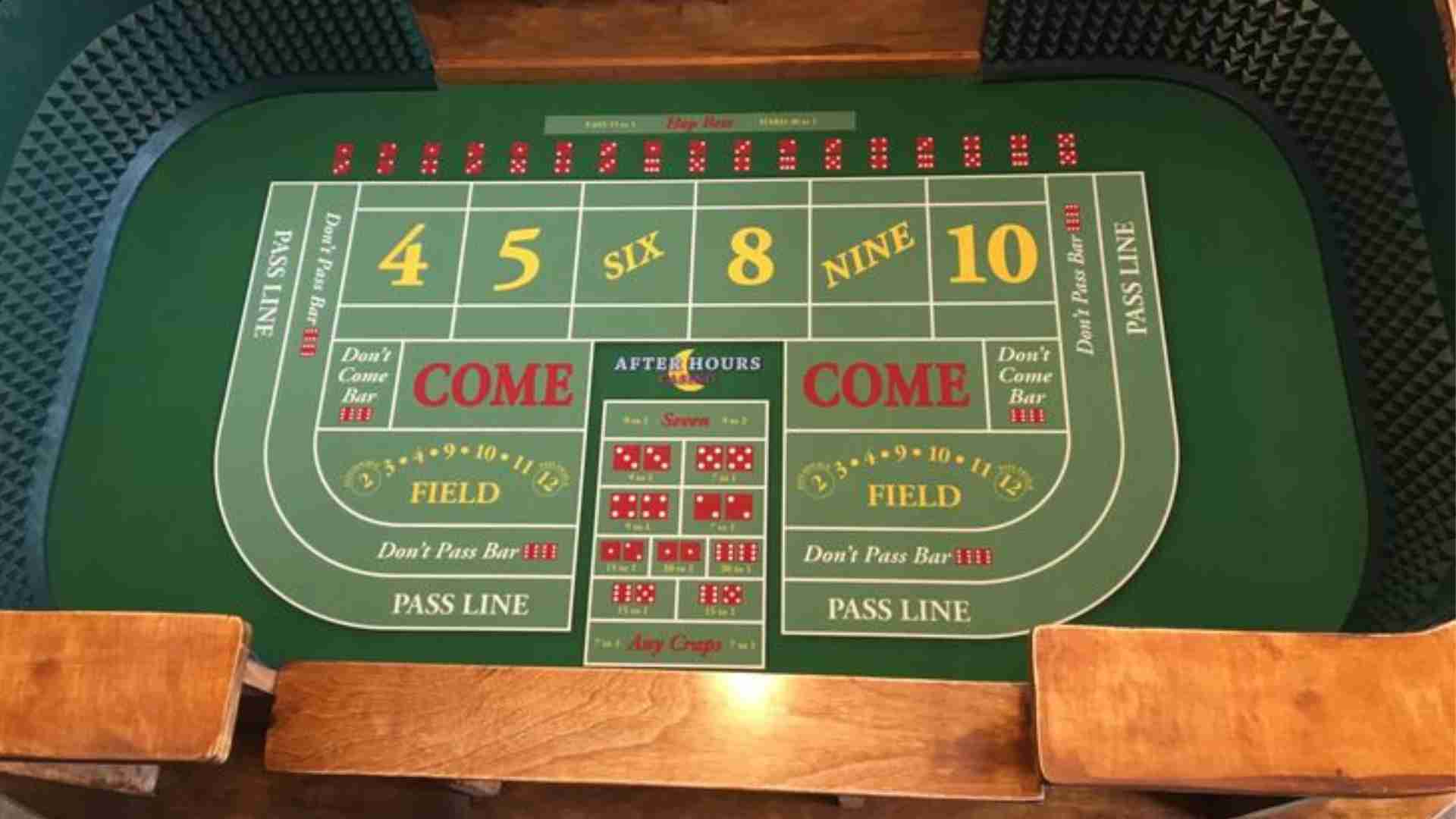
Entering the lively environment of a casino craps game can be exhilarating yet deeply confusing due to the massive array of wagering options available on the felt layout. Smart participants realize that long-term sustainability relies heavily on understanding the built-in mathematical advantage the casino holds over each specific choice. By systematically comparing these margins, you can make informed decisions that protect your bankroll and extend your playing sessions.
The Gold Standard of Low Advantage Wagers
The foundation of any optimal strategy relies on the Pass Line and Don't Pass wagers, which feature some of the friendliest metrics in the entire casino landscape. A standard Pass Line bet carries a modest house advantage of 1.41 percent, making it an excellent starting point for any novice. Conversely, choosing the Don't Pass option slightly improves your position by lowering the statistical barrier to a mere 1.36 percent.
These initial choices become even more valuable when players complement them by taking or laying true odds behind the line. Because the casino pays out these secondary wagers using precise mathematical probabilities, they feature an absolute zero percent advantage for the house. Utilizing a reputable resource like the m88 link 2 platform helps enthusiasts discover how strategic combinations dramatically diminish the overall statistical drag on their chips.
Evaluating Next Roll Come and Don't Come Options
Once a point number has been successfully established, the Come and Don't Come options function as secondary lines of engagement that mirror the original sequence. The mathematical advantage for a Come bet stands precisely at 1.41 percent, while the Don't Come variant remains fixed at 1.36 percent. These options allow participants to distribute their exposure across multiple numbers while maintaining highly competitive statistical posture.
Just like the initial sequence, these multi-stage wagers allow for backing with additional true odds to further neutralize the casino profit margin. Experienced players frequently utilize these segments to create complex systems that capitalize on extended rolling cycles. Sticking strictly to these primary segments keeps your overall financial risk to an absolute minimum.
The Middle Ground of Place Wagers
For players who prefer not to wait for the lengthy come-out process, placing specific numbers directly offers an accelerated path into the action. Betting directly on the six or eight yields a relatively fair advantage of 1.52 percent, which remains highly acceptable for most casual budgets. However, the metrics shift noticeably when shifting attention toward the five and nine, where the margin climbs to 4.00 percent.
The situation grows even steeper when selecting the outside boundaries of four and ten, which carry a 6.67 percent tax. While these options offer quicker gratification than waiting for consecutive rolls, the elevated thresholds demand extreme caution over long sessions. Discerning players balance their action by favoring the interior numbers to avoid accelerated capital depletion.
High Risk Center Propositions to Avoid
The center section of the layout features enticing payout ratios that promise massive returns on a single throw of the dice. Unfortunately, these proposition wagers also house the most punitive margins on the entire table, often exceeding double digits. For instance, the popular Any Craps selection forces participants to confront a staggering 11.11 percent disadvantage.
Stepping further into extreme territory, specific single-roll combinations like the hard two or hard twelve carry a brutal 13.89 percent disadvantage. These tempting choices can rapidly erode even the most robust bankrolls within a handful of unsuccessful throws. Restricting your activity to low-margin outer segments remains the most definitive pathway to maintaining longevity at the table.

How to Compare Different Probabilities ...
Understanding how to evaluate different mathematical likelihoods is a crucial skill for modern decision-making across various real-life contexts. Whether you are analyzing financial trends, predicting game outcomes, or assessing scientific data, contrasting different values helps clarify your actual chances. Learning the fundamental methods to weigh these ratios against each other allows you to approach complex daily challenges with much greater confidence.
Converting Formats for Easy Comparison
Probabilities frequently appear in distinct formats such as fractions, decimals, or percentages depending on the source material. To properly analyze separate likelihoods, it is best to convert them into a uniform format before making any assessments. Converting everything into standard decimal form or simple percentages creates a reliable metric for direct mathematical observation.
For example, comparing a one-in-ten chance against a fifteen percent likelihood becomes significantly easier once both values are expressed as percentages. Recognizing that ten percent is lower than fifteen percent removes immediate ambiguity from your analytical evaluations. This basic conversions process forms the foundation for more advanced statistical tracking and behavioral observations.
Understanding Relative Likelihood and Odds
Another advanced technique involves examining the relative likelihood between two distinct candidate models or scenarios. This strategy measures the relative plausibility of specific events happening based on the parameters you currently know. Evaluating these ratios helps analysts estimate the potential risks associated with varying environmental factors.
Many standard digital systems rely on these calculations to build fair interfaces for users worldwide. When exploring various strategic platforms, accessing a secure portal like m88 link 2 offers an excellent space to witness how random events display operational probabilities. Tracking these numerical updates systematically over time helps individuals build highly practical analytical skills.
Differentiating Independent and Dependent Events
A common error when evaluating odds is failing to distinguish between independent and dependent circumstances. Independent occurrences remain completely unaffected by historical results, meaning each individual event resets the calculation entirely. Conversely, dependent scenarios change based on previous actions, which directly alters the probability distribution of future outcomes.
Recognizing this critical structural balance transforms how you evaluate risk and adjust personal expectations. By studying the historical frequency of occurrences, you can better categorize the nature of the mathematical challenges ahead. This focused observation reduces structural confusion and ensures a much more accurate evaluation of real-world statistics.
Practical Exercises for Better Decisions
The most efficient way to master these comparison techniques is to practice with simple daily experiments using dice or playing cards. Focus on recording the actual outcomes over multiple rounds to see how mathematical distributions align with expected calculations. Over time, this consistent practice builds a strong intuitive grasp of statistical variations.
Always remember to establish clear objective guidelines when assessing uncertainty in daily lifestyle scenarios. Maintaining a balanced, data-driven perspective ensures that you can enjoy evaluating variables without experiencing unnecessary mental fatigue. With regular practice, navigating different mathematical likelihoods becomes an accessible and deeply rewarding skill.
Semua artikel sudah ditampilkan.